About This Book
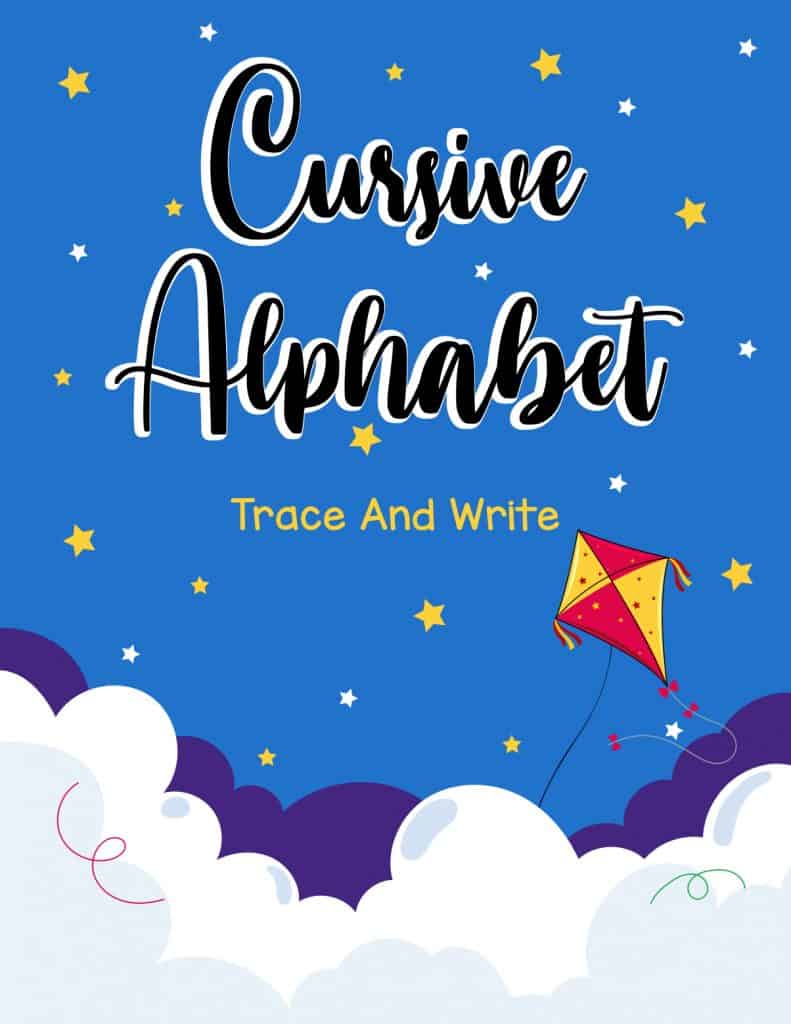
Cursive Alphabet Trace & Write – Free Printable Worksheets is a free printable worksheet set for learning the cursive alphabet by tracing and writing. The destination page is headed ‘Cursive Alphabet’ — this set’s subject in the host’s short form — and the file it serves, ‘8. Cursive Alphabet Trace and Write.pdf’, carries the title’s trace-and-write name under the host’s numbered preschool-collection filename form (8.) — the same worksheets under the filename the site serves them by. The set’s work is the join: letters that enter and exit each other in one unbroken line, practised stroke by stroke until flow replaces assembly.
Handwriting is a motor skill wearing a literacy costume, and cursive is its advanced course. Print asks the hand to build each letter from separate strokes, lifting between them; cursive asks for something harder and ultimately faster — continuous movement, where the difficulty is front-loaded into learning the joins and the reward is a hand that eventually writes at conversational speed without the pen ever leaving the page. Tracing is how that difficulty is made honest: the guided line carries the shape while the hand rehearses the motion, and the worksheet’s sequence — trace heavily, trace lightly, copy beside, write alone — is scaffolding being dismantled at exactly the pace of competence. Formation errors caught at this stage matter out of proportion, because a badly learned join becomes an automatic habit within weeks, and habits of the hand are the hardest curriculum to revise. Teachers therefore watch the early pages closely, and parents should expect the work to look slow: in handwriting, slow is not the opposite of fluent but its raw material, assembled correctly.
What Learners Will Practise
The Joins Themselves
Learners practise how each letter enters and leaves its neighbours. Cursive lives in the connections; the letters are merely where connections pause.
Fading Support
The set practises moving from full tracing to independent lines. Support withdrawn at the pace of competence is the whole method.
Formation Before Speed
Writers practise correct shapes slowly, deliberately. Automatic habits form either way — the worksheets ensure they form well.
Key Features
The join focus is the feature: connections taught as the curriculum, not the decoration. The scaffolded sequence is the second — trace, copy, write — and the shelf fit the third, this cursive set beside this list’s letter-matching and beginning-sounds sets. On this shelf it joins the letters here.
Who This Book Is For
Young writers whose print is secure are its first audience. Teachers form its second readership, sequencing formation before fluency. Parents make its third, having their own cursive inspected.
How to Use This Book
Insist on the entry and exit strokes even when tracing feels slow; the joins ARE the lesson. Stop a session while the writing is still careful — tired hands practise errors. Praise the line that flows unbroken; it is the skill announcing itself.
Related Books
The letter-matching set stands at Match Letters – Fun Alphabet Matching Worksheets for Kids, and the beginning-sounds set at Beginning Sounds Worksheets – Fun Phonics Practice.