About This Book
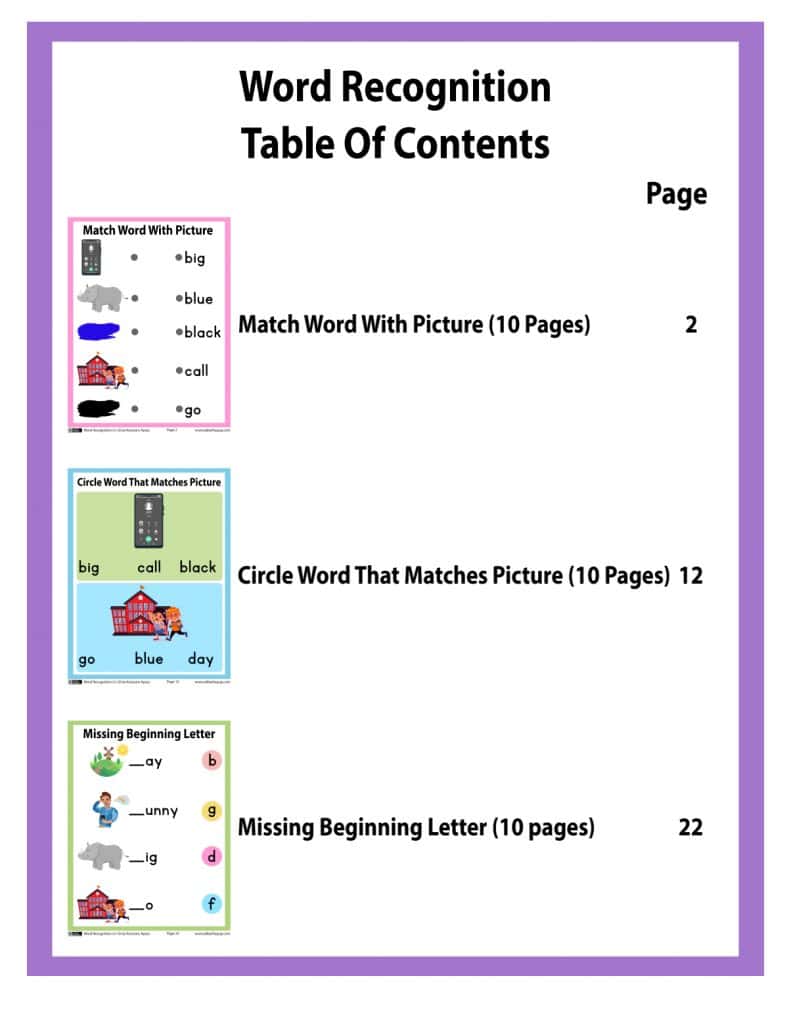
Fun & Free Word Recognition Worksheets – Improve Reading Skills is a worksheet set for building word recognition in beginning readers. The destination page is headed ‘Word Recognition’ — this set’s subject in the host’s short form — and the file it serves, ’17. Word Recognition.pdf’, carries the same name under the host’s numbered preschool-collection filename form (17.) — the same worksheets under the filename the site serves them by. The set’s work is the sight layer of reading: the high-frequency words a beginner meets on every page, practised until they are recognized as wholes rather than decoded as puzzles.
Reading science is blunt about the bottleneck: working memory is tiny, and every unit of it spent assembling a word from letters is a unit unavailable for understanding the sentence the word lives in. Fluent readers are not faster decoders; they are recognizers, carrying thousands of words as single visual objects, so nearly all their attention is free for meaning. Recognition worksheets attack exactly that conversion, word by word, through the only mechanism that builds it — repeated, varied, successful encounters. The ‘fun and free’ framing in the title matters more than it may appear: recognition needs volume, volume needs willingness, and willingness in young children is manufactured by formats that feel like games — matching, tracing, circling, colouring the right word — each one another encounter in costume. Teachers use such sets as the bedrock shift of the reading day, the ten minutes that quietly determine how the other fifty will go. A set like this is also honest about its limits: recognition without real reading alongside it becomes a parlour trick, so its pages belong next to actual books, not instead of them.
What Learners Will Practise
Whole-Word Glances
Learners practise knowing common words on sight, without sounding out. The glance is the goal; decoding remains the backup, not the route.
Encounters in Costume
The set practises meeting the same words across matching, tracing, and finding formats. Recognition deepens with variety, not with sameness.
Attention Freed for Meaning
Children practise reading short stretches where known words carry the load. Meaning gets the attention recognition stops spending.
Key Features
The conversion target is the feature: decoders turned into recognizers, word by practised word. The volunteered volume is the second — fun as a delivery system for repetition — and the shelf fit the third, this recognition set beside this list’s word-search and word-families sets. On this shelf it builds the bedrock here.
Who This Book Is For
Accurate-but-slow beginning readers are its first audience. Teachers form its second readership, laying the sight-word bedrock. Parents make its third, running daily practice that feels like play.
How to Use This Book
Keep sessions short and daily; recognition is built by frequency of days, not length of sittings. Celebrate the first instant recognitions aloud — the child should know the glance is the achievement. Pair worksheet words with the same words hunted in real books the same day.
Related Books
The word-search set stands at Word Search, and the word-families set at Word Families – Fun & Engaging Worksheets for Early Readers.