About This Book
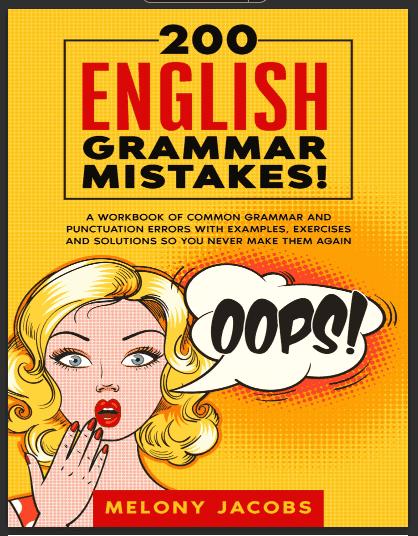
200 English Grammar Mistakes! is a grammar book built as a catalogue: two hundred of the English grammar mistakes learners most commonly make, gathered in one inventory for study and correction. The post’s Download button leads to a Google Drive file whose listed title, ‘1836-200-english-grammar-mistakes-(www.tawcer.com).pdf’, carries this book’s exact name in slug form under a numeric prefix, with its source site named in the filename — identity established by the served filename itself. The book’s work is enumeration as reassurance: the learner’s errors, counted and named, become a syllabus instead of a shame.
A numbered catalogue changes the emotional mathematics of error. Uncounted, a learner’s mistakes feel like a fog — everywhere, personal, endless; counted at two hundred, they become a border with a fence, and fences can be patrolled. The number also smuggles in a statistical truth: these mistakes are common because they are natural — each one is English being learned the way minds learn, by over-applying a real pattern one bend too far. Studying the catalogue is therefore less like reading one’s own charges and more like reading a weather map of a climate every learner passes through. Examination candidates get the hardest-headed benefit: test-setters fish in exactly this pond, and a learner who has walked the inventory recognizes the baited hooks on sight. Teachers, for their part, can plan a term against the list — the class’s own census first, the famous remainder after. There is also a discipline hidden in the format: a mistake studied cold, in someone else’s sentence, costs no face, and learners will examine at leisure in print what they would defend hotly in their own writing.
What Learners Will Practise
Recognition Before Production
Learners practise spotting each catalogued mistake in cold print. An error recognized in another’s sentence is halfway to retired in one’s own.
Pattern Over Incident
The book practises grouping mistakes into the patterns that generate them. Retire the pattern and its incidents retire with it.
Examination Eyes
Readers practise seeing traps as a setter sets them. The catalogue is the pond the examinations fish in.
Key Features
The count itself is the feature: two hundred, finite and finishable, printed in the title as a promise. The census comfort is the second — errors as climate, not character — and the shelf fit the third, the mistakes catalogue beside this list’s squill and backwards-counting sets. On this shelf it takes the census here.
Who This Book Is For
Learners tired of repeating errors are its first audience. Teachers form its second readership, planning against the inventory. Examination candidates make its third, learning the trap pond by heart.
How to Use This Book
Mark the entries you have personally committed before studying any others; your census outranks the general one. Work the catalogue in pattern order where the book allows, not page order. Re-test retired mistakes in fresh writing monthly — retirement needs auditing.
Related Books
The squill book stands at WILL AND SQUILL, and the backwards-counting set at Counting Backwards.